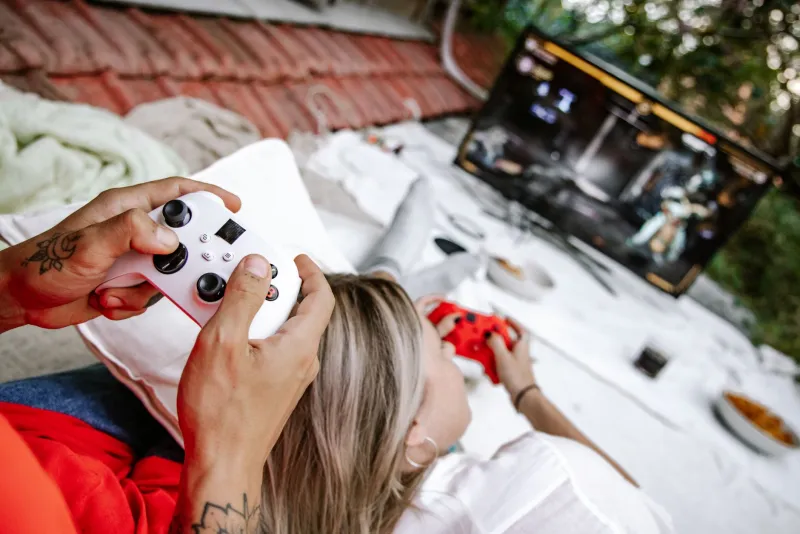
There's No Game Over Screen and Honestly? We're Thriving: The Cozy Game Revolution Is Rewriting the Rules
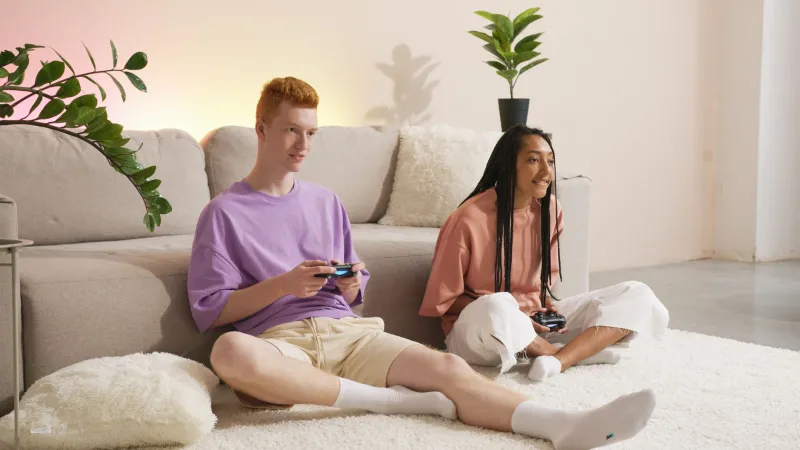
Somewhere along the way, somebody decided that games needed to punish you to be worth playing. Fail states. Timers. Leaderboards. The looming possibility that you would, at any moment, lose everything and have to start over. For a long time, that structure was so baked into gaming culture that questioning it felt almost heretical — like asking whether a roller coaster really needed the drops.
And then, gradually, a different kind of game started showing up. Games about tending gardens. Games about wandering through forests cataloguing mushrooms. Games where the most stressful thing that happens is that you forgot to water your tomatoes and they're looking a little sad. Games where there is no boss, no timer, no Game Over screen — just a world to exist in at whatever pace your nervous system requires.
The cozy game boom isn't a trend anymore. It's a cultural shift. And it's long overdue.
What We Talk About When We Talk About 'Winning'
The traditional definition of winning in games is embarrassingly narrow when you actually examine it. You beat the level. You topped the scoreboard. You killed the thing before it killed you. This framework made sense for arcade games designed to eat quarters as fast as possible, but somewhere along the line it became the default template for an entire medium — one that now reaches hundreds of millions of people across every age group and life circumstance.
The problem isn't that competitive, high-stakes games exist. They're genuinely great, and there's real satisfaction in mastering something difficult. The problem is the implicit cultural message that games without those stakes are somehow lesser. That a game about a fox slowly restoring a meadow is a "casual" experience for people who can't handle real games. That relaxation is a consolation prize for people who aren't good enough to compete.
That attitude was always a little absurd. In 2024, it's completely indefensible.
The Millennial and Gen Z Factor
Here's a non-controversial observation: millennials and Gen Z are exhausted. They've grown up navigating economic instability, a pandemic, climate anxiety, and a social media landscape specifically engineered to make them feel inadequate. They've been losing — by traditional metrics — in plenty of arenas that actually matter. The last thing many of them want when they sit down to decompress is another environment where failure is the primary teaching mechanism.
This isn't weakness. It's rationality. When your waking hours already involve navigating genuine high-stakes situations, choosing entertainment that doesn't replicate that stress isn't avoidance — it's self-preservation.
Nature-inspired cozy games, in particular, seem to tap into something that goes beyond simple stress relief. There's research suggesting that even simulated natural environments can produce measurable reductions in cortisol levels. Games that put you in a hand-painted forest or let you spend an afternoon fishing in a pixelated river are doing something physiologically real, not just aesthetically pleasant. Players aren't choosing these games because they've given up on challenge. They're choosing them because they've correctly identified what kind of challenge they actually need right now.
Redefining the Win Condition
What's fascinating about the best cozy and nature games is that they haven't eliminated the sense of accomplishment — they've just relocated it. Winning in a game about ecological restoration might mean watching a degraded habitat slowly return to health over dozens of hours of play. Winning in a foraging game might mean finally identifying every mushroom species in the game's regional ecosystem. The satisfaction is real. It just doesn't announce itself with explosions and a kill count.
This is actually a more sophisticated design challenge than traditional win conditions, not a simpler one. Building a game that feels rewarding without manufactured urgency requires developers to understand human motivation at a deeper level. You can't rely on the cheap dopamine hit of survival pressure. You have to create genuine investment through beauty, discovery, narrative, and the quiet pleasure of mastery over time.
The indie developers building nature games are, frankly, doing some of the most interesting design work in the industry right now. And the mainstream studios are starting to notice.
The Ripple Effect on Mainstream Design
You don't have to look hard to see the cozy game influence spreading into larger productions. Major franchises are adding low-stakes exploration modes. Open-world games are increasingly designed to reward wandering as much as mission completion. The concept of "gameplay loops" that don't require conflict is no longer a fringe indie idea — it's a design consideration that major studios are actively incorporating.
This is good for everyone, including players who love high-stakes competitive games. Broader design literacy means better games across the board. When developers understand how to create meaningful engagement without manufactured stress, they make better tense games too — because they understand what tension is actually for.
This Isn't the End of Challenge. It's the Beginning of Choice.
To be clear: nobody here is arguing that Dark Souls should add a relaxation mode or that every game needs a petting mechanic. Competition, difficulty, and the genuine satisfaction of overcoming something hard are real and valuable parts of gaming. They're not going anywhere, nor should they.
What we're arguing is that a medium as expansive as video games should be able to hold multiple definitions of what makes an experience worthwhile. The raccoon who spends an evening reorganizing a virtual garden and the raccoon who spends an evening grinding through a brutal dungeon crawler are both doing something legitimate. Both are playing.
The cozy game boom isn't a retreat from gaming culture. It's an expansion of it. And if the future of game design is one where 'winning' can mean a hundred different things depending on what you actually need that day — we'd call that a pretty significant victory.